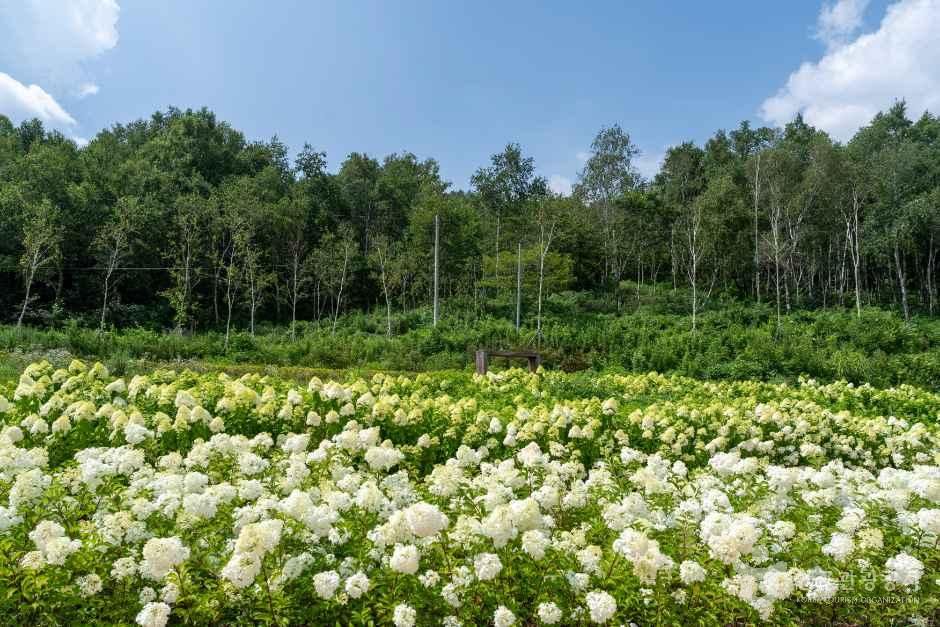
Yeonhwasan Provincial Park (연화산도립공원)
Located 12 km northwest of Goseong-eup, Yeonhwasan Mountain was named because its mountain contours resemble a blooming lotus flower. Originally called Biseaksan...

Address: Bukpyeong-ri, Gaecheon-myeon, Goseong-gun, Gyeongsangnam-do
Located 12 km northwest of Goseong-eup, Yeonhwasan Mountain was named because its mountain contours resemble a blooming lotus flower. Originally called Biseaksan, its name was changed to the current one during the reign of King Injo of the Joseon Dynasty. Consisting of three peaks—Oknyebong, Seondobong, and Mangseonbong—it stands at 524 meters, making it a relatively low mountain, yet it attracts many hikers with its beautiful natural scenery, including lush forests and deep valleys. It was designated as a Gyeongsangnam-do Provincial Park in 1983, and on its northern foothills stands Okcheonsa Temple, founded in 670 (the 10th year of King Munmu of Silla) by the great monk Uisang.
The name 'Okcheonsa' originated from a spring behind the temple's main hall (Daeungjeon) that gushes clear water year-round, which is said to be beneficial for stomach and skin diseases. Since 1948, the Okcheongak pavilion has been built and preserved over the spring. Other temples on Yeonhwasan include Baeknyeonam, Cheongnyeonam, and Yeondaeam. Famous local specialties near Yeonhwasan include pine mushrooms and wild berries, and dinosaur footprint fossils from the Mesozoic Cretaceous period can be found in the valleys. Major national heritage sites include Okcheonsa Zabangru Pavilion (Gyeongnam Tangible Cultural Heritage) and Okcheonsa Daeungjeon Hall (Gyeongnam Tangible Cultural...
Visitor information
- 쉬는 날: ※ Access may be restricted depending on weather conditions
- 주차 안내: Available (approx. 100 compact cars) Fee: Free
- 문의 안내: 055-670-2663